A remote valve actuator can be controlled from a distance, whether the installation is fully serviced or has limited infrastructure. This article focuses on remote or unmanned sites where electrical power, instrument air or a hydraulic supply may be limited or unavailable. Selection must account for the available supply, energy used while moving and waiting, the required response to a failure, and feedback to the remote control system.
That points to self-contained electro-hydraulic actuators, stepping actuators that lock in position between moves, and electric actuators. Gas-powered actuators remain in use, but venting natural gas faces growing regulatory scrutiny.
Constraints at remote or unmanned valve installations
Remote wellheads, pipeline block valve stations, unmanned platforms, water outstations and reservoirs can face some or all of these constraints, depending on the utilities and access available.
- Limited power: some sites have no grid connection and rely on a small solar or generator supply.
- Limited or absent air or hydraulic supply: providing instrument air requires compressors, and a central hydraulic power unit (HPU) needs power, pipework and upkeep.
- Costly visits: a long drive, a boat or a helicopter. The frequency and cost of access belong in the selection brief.
- Control by telemetry: SCADA (supervisory control and data acquisition) systems run pipelines, water networks and other dispersed assets through remote terminal units (RTUs) or PLCs in the field, linked by radio, telephone line, cable, fibre or satellite.
The power budget for a low-power valve actuator
Energy while moving and in standby
Separate starting current, running current and standby demand. Calculate energy in watt-hours across the actual operating cycle, rather than selecting from a motor wattage alone, and ensure the supply can deliver the peak current. The following numbers are an illustrative energy calculation, not HYFLOW ratings. A drive drawing 240 W (10 A at 24 V) for one minute uses 4 Wh, while a continuous 1 W background load uses 24 Wh a day. On a valve that moves a few times a day, background consumption can outweigh the energy used for movement.
Standby consumption includes any power needed to hold position, but holding does not always require electrical power. Some actuators hold mechanically without power while their electronics, instrumentation or heaters continue to consume energy. Confirm the demand of the complete package.
Include the RTU, radio, instruments, heaters and any continuously energised valves in the same energy budget. Use their actual operating schedules and avoid counting loads already included in the package figures.
Voltage drop on 24 V DC cable runs
Check voltage at the actuator terminals under the highest expected load, including starting and simultaneous operation. Cable sizing must account for the complete outgoing and return path, conductor resistance, temperature and connection losses. For a stated load, voltage drop is current multiplied by circuit resistance. Compare the calculated terminal voltage with the equipment’s permitted range. Ask the electrical designer to check conductor sizing and protection; a nominal 24 V source does not guarantee 24 V at the actuator.
How remote sites are commonly powered
A battery, solar charging system or generator may form part of the site supply. Size it from the complete load profile and the required autonomy, meaning the period the site must operate without recharge. Include seasonal conditions, battery ageing and recovery after a fail-safe operation in the project design.
Remote valve actuator options and their trade-offs
Self-contained electro-hydraulic actuators
A self-contained electro-hydraulic actuator carries its own pump, motor and reservoir, so it needs only electrical power and a control signal, not a central HPU or long tubing runs. Our guide to self-contained actuators versus a central HPU covers that decision. An accumulator stores fluid under pressure against a gas charge, ready to drive the actuator when pump flow is unavailable. The trade-offs are the peak current while the pump runs and hydraulic fluid to look after.
Stepping actuators at remote sites
A fluid-power stepping actuator moves in controlled increments. It still needs an appropriate pneumatic or hydraulic supply for movement, so it is not a solution to missing utilities on its own. Confirm the exact mechanism’s holding behaviour, control requirements and response to each supply failure. Our stepping actuator guide explains the operating principle.
Gas- and air-powered actuators
Identify the working fluid and where exhaust goes. A system that vents natural gas has different emissions implications from one using instrument air or an approved gas-recovery arrangement. Do not treat all gas-powered systems as identical. The operator should assess the actual circuit and applicable local environmental requirements before selection.
Electric actuators
Electric actuators are an option where electrical power is available but fluid-power utilities are not. Specify the response to power and signal loss separately, including any backup arrangement required. See the HYLINE-E range and request confirmation for the proposed build.
Fail-safe action when the power runs out
At a remote site, power loss can be as ordinary as a flat battery. Decide for each valve whether it should close, open or stay put when power or signal is lost, based on process risk, not habit. A spring or charged accumulator can provide energy for a designed fail stroke. A double-acting designation alone does not establish that a valve will hold position: the valve load, leakage paths, control circuit and any locking arrangement matter. Restoring stored energy after a trip adds to the power budget. Our guide to fail-safe valve actuators covers each mode.
Loss of telemetry is separate from loss of the actuator’s command signal. An RTU or PLC may continue to output a valid, unchanged command after communications fail, so the actuator’s signal-loss response may not activate. Define the local controller’s timeout, alarm and fallback action for lost communications or stale commands, based on process risk, and test that response during commissioning.
Remote diagnostics with 4-20 mA and HART feedback
Visits are costly, so the actuator should report problems before anyone travels. A 4-20 mA loop uses a live-zero convention, but fault detection depends on the transmitter and receiving system configuration. HART communication adds digital information to compatible instrumentation. Identify which measurements and alarms the selected instruments actually provide. Depending on the fitted sensors and controls, useful information may include:
- valve position against the command, to spot sticking or drift;
- supply voltage at the actuator while it moves;
- pump run time, hydraulic pressure and oil level.
Environment: temperature, corrosion and ingress
Remote sites can bring desert heat, arctic cold, salt spray and flooded valve pits. Check:
- Temperature: the ambient range should cover site extremes, including solar gain.
- Corrosion: ISO 12944-2 classifies environments by corrosivity, which guides the paint system.
- Ingress: the IP rating (IEC 60529) should suit rain, dust, hose-down and any risk of immersion. IP66 covers powerful water jets, not immersion. HYFLOW is listed as IP66, so for a potentially flooded valve pit, confirm that the complete actuator package is suitable for the specified immersion depth and duration.
- Hazardous areas: tell us the zone, gas group and temperature class, and we will confirm the certification for your exact unit.
Remote valve actuator selection checklist
- Valve type, size, torque or thrust, stroke and speed.
- Duty: on-off, modulating, stepping or emergency shutdown.
- Supply: voltage, source, capacity, autonomy and cable distance.
- Energy budget: moves per day plus standby consumption, including any holding demand.
- Fail action on loss of power, command signal or fluid supply, plus the response to lost telemetry or stale commands.
- Feedback to SCADA: 4-20 mA, HART and limit switches.
- Environment: temperature, corrosivity, ingress and area classification.
- Access: visit frequency and how long a fault can wait.
Advanced Actuators ranges for remote and low-power sites
Our established, field-proven ranges cover the vast majority of real-world applications, including remote and standalone valves, with bespoke engineering where a duty is genuinely different.
Discuss the complete actuator package
HYFLOW local hydraulic power units can form part of a self-contained package. Start with the required valve movement and duty, then request a matched pressure, flow and electrical schedule. Obtain starting, running and standby demand for the exact configuration before sizing a battery or solar supply.
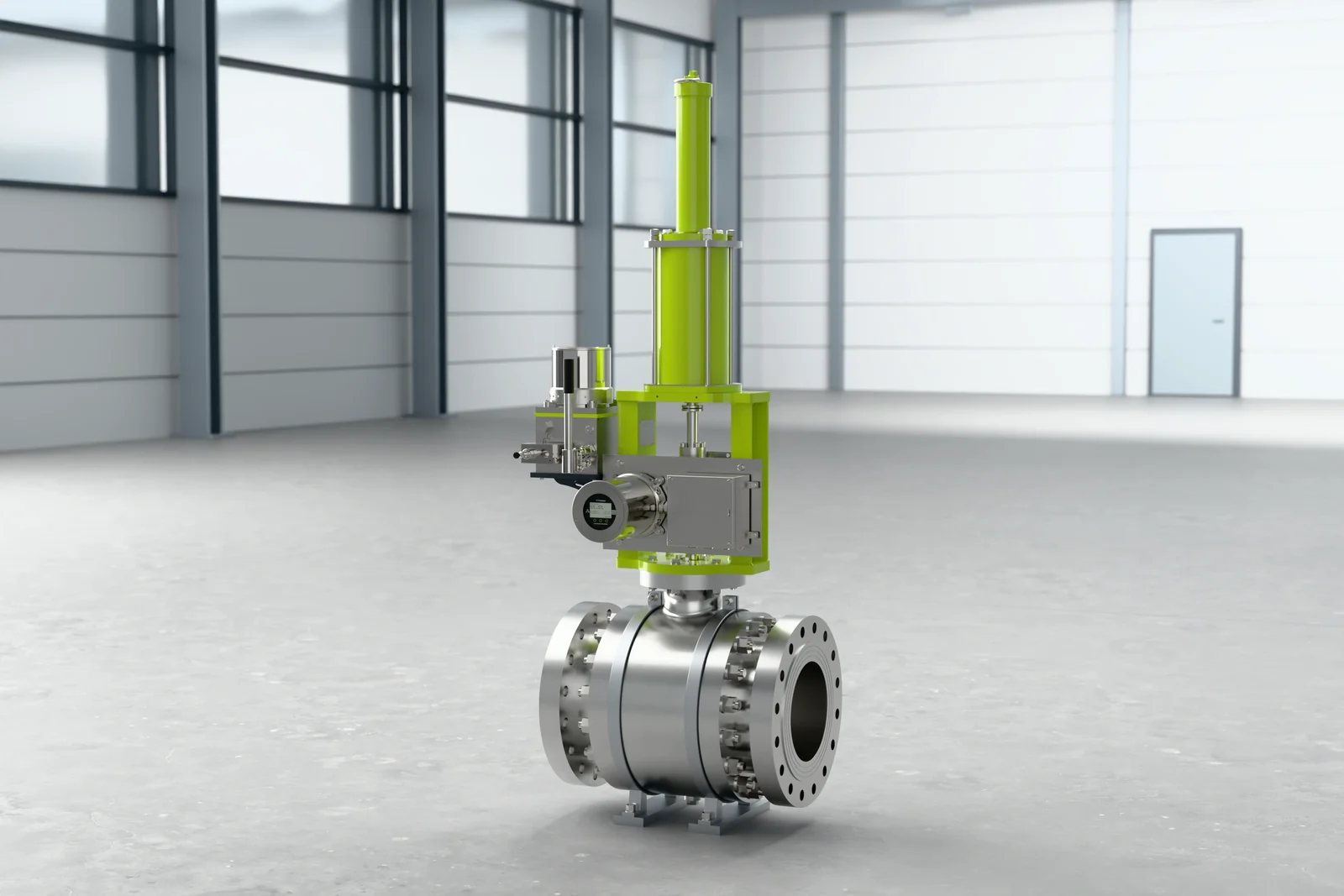
Discuss HYLINE linear actuation for an appropriate sliding-stem duty, or a quarter-turn package for a rotary valve. For incremental choke positioning, discuss HYSTEP stepping actuators alongside the available fluid-power supply. HYTRACK position feedback and suitable controls can help complete the monitoring arrangement. Confirm the signal, host compatibility, environmental rating and any additional sensors in the quotation, rather than assuming every diagnostic is included.
Frequently asked questions
What is a remote valve actuator?
A remote valve actuator opens, closes or positions a valve in response to commands sent from another location. Remote control does not necessarily mean that the site is off-grid or lacks utilities. At remote or unmanned sites with limited infrastructure, selection should account for available power, standby consumption, fail action and feedback to the control system.
How much power does a low-power valve actuator need?
Check both peak current and daily energy use. Add the energy used for movement to standby consumption, including any holding demand. Some mechanisms hold position without power, although controls and instrumentation may still draw current. A 240 W drive running for one minute uses 4 Wh, while a continuous 1 W background load uses 24 Wh a day. Include the RTU, radio and instruments on the same supply, without counting loads already included in the package figures.
Does cable length matter for a 24 V DC valve actuator?
Yes. Cable resistance causes a voltage drop when current flows. Include both conductors, temperature and connections, then check the terminal voltage during starting and movement against the actuator limits. The electrical design should cover the complete circuit and protective devices.
Can a valve actuator run from battery or solar power?
Off-grid sites often run equipment from a battery bank charged by solar panels, sometimes with a small generator as backup. Whether an actuator suits that supply depends on its voltage, starting and running current, and standby consumption, including any holding demand. Size the panels and battery for the whole load and the days of autonomy you need.
Are gas-powered valve actuators still acceptable at remote sites?
That requires a site-specific assessment. Identify whether the device vents gas, recovers it or uses instrument air, and ask the operator to confirm the applicable environmental requirements. Do not assume a gas-powered circuit is suitable simply because a similar installation exists elsewhere.
What happens to a remote valve if the power fails?
The complete actuator and control arrangement determines the response. Specify loss of electrical power, control signal and fluid supply separately, and define the local controller’s response to lost telemetry or stale commands. A communications failure may leave the actuator receiving a valid, unchanged command. If a valve must move, verify the stored-energy arrangement; if it must hold, verify the holding arrangement under the expected load. Test the agreed response during commissioning.
Talk to our engineers about remote valve automation
Send us the valve type and size, the torque or thrust, the supply available (voltage, capacity and cable run), the fail action you need and the area classification. Email sales@advanced-actuators.com, call +44 (0)1535 655151 or contact our head office, and we will recommend a package from our established ranges. Full specifications are on the HYFLOW product page.