Valve actuator maintenance is the planned inspection, testing and servicing that keeps an actuator ready to move its valve fully, at the right speed and to the right position. It matters even more on emergency shutdown (ESD) and isolation valves, which can sit still for months and must then work first time.
Warning signs are often small, such as a slower stroke, a weeping fitting or a new alarm. A planned actuator service, or a full overhaul when needed, deals with them on a planned date rather than when the valve is called on.
Why valve actuators need planned maintenance
Long idle periods can hide problems. Historical HSE findings on riser shutdown valves highlighted recurring failures and the importance of investigating causes. They are evidence of failure mechanisms, not a current failure-rate forecast for every installation. Plan maintenance around the manufacturer’s instructions, actual duty and site risk assessment.
Warning signs that an actuator needs servicing
Compare each sign with the commissioning baseline.
Movement and control symptoms
- Slow or erratic strokes. Friction can make a valve stick and then jump; low supply pressure, blocked filters and worn seals can also slow a stroke.
- Hunting or overshoot. A modulating valve keeps moving around its set point, or overshoots it. Sticking or backlash can cause a steady cycle that loop retuning will not cure.
- Not reaching an end position. Record the command, indicated travel and supply conditions for a competent assessment of the valve, actuator and controls.
- Position drift. On hydraulic units, creeping away from position can point to leakage past piston seals or through control valves.
Leaks, consumption and fluid condition
- External leaks of oil or air at seals, fittings, hoses and exhaust ports.
- Rising air or oil consumption, such as a pump running more often, which suggests a leak.
- Contaminated hydraulic fluid. Particles wear pumps and cylinders and can make components stick.
- Unexpected accumulator behaviour. Record any pressure or performance change and arrange assessment under the manufacturer’s maintenance procedure.
Physical condition and alarms
- Unusual noise, such as knocking, squealing or a laboured pump.
- Corrosion, especially on spring housings and tie rods. HSE has warned that corrosion of spring end-plate retaining rods can release stored spring energy and leave a shutdown valve inoperable.
- Damaged cables, glands or covers, which can let water in or compromise explosion protection.
- Diagnostic alarms, such as a position deviation, low oil level or high oil temperature.
Routine actuator maintenance checks by type
Pneumatic actuators
- Air quality. Keep instrument air clean and dry: water corrodes internal parts and particles block small passages. ISO 8573-1 sets purity classes for specifying it.
- Filter regulators. Drain water, change elements and check the set pressure.
- Seals, tubing and mounting. Leak test fittings and seals, and check bolts, couplings and travel stops.
Hydraulic and electro-hydraulic actuators
- Fluid cleanliness. Sample the oil against the maker’s target cleanliness, expressed as an ISO 4406 code.
- Filters, hoses and fittings. Change elements on schedule, and look for chafing, cracking and weeping.
- Accumulator condition. Inspection, pressure checks and charging belong to trained personnel using the exact manufacturer’s procedure and equipment. Do not attempt to diagnose stored-energy components by loosening fittings.
- Motor and electronics. Note pump run times, and check glands, seals and terminals for moisture.
Electric actuators
Where there is no air or hydraulic supply, electric actuators are an option; their checks centre on the motor, gearbox, seals and electronics.
Stroke testing, proof testing and partial stroke testing
A full stroke test checks movement through the valve’s whole travel and can include timing against the commissioning baseline. On safety-related valves, a proof test follows an approved procedure to reveal the dangerous failures covered by that test. Its scope may include the shutdown signal path, required travel, operating time and seat leakage where specified; timing a normal stroke alone is not a complete proof test. Partial stroke testing moves an on-off valve through a limited part of its travel and may be possible while the process remains online, subject to the approved procedure. It can reveal some movement faults, but does not prove full travel or seat tightness, so it supplements the required full proof-test programme. See our guide to fail-safe valve actuators and how they are tested.
HSE inspections of riser shutdown valves found little trend analysis and limited use of warning or action levels to plan repairs before failure, so set stroke time limits and act on trends.
Scheduled and condition-based maintenance
Preventive maintenance aims to reduce degradation and the chance of failure. It can follow a fixed schedule or be triggered by an assessment of equipment condition. A maintenance plan can combine scheduled tasks with condition-based checks.
| Approach | What triggers the work | Where it fits |
|---|---|---|
| Time-based (scheduled) | A fixed interval or number of cycles, often from the maker’s manual | Filter elements, seal kits and fluid changes |
| Condition-based | Stroke times, position deviation, pump run time, oil analysis and alarms | Critical valves, acting before failure without needless strip downs |
Compare the commanded position with feedback from a suitable position transmitter. Alarm generation depends on the receiving system and configuration. Additional information such as oil level or accumulator pressure requires the corresponding fitted sensors and controls; confirm the available signals for the exact package. See intelligent valve positioners and diagnostics.
Safety during actuator maintenance
Control stored energy before intrusive work
HSE maintenance guidance emphasises competent personnel, safe isolation and control of stored energy. A stopped actuator can still contain a loaded spring, charged accumulator or trapped pressure. The process valve can also be exposed to differential pressure. Use the site permit and isolation arrangements together with the exact manufacturer’s procedure. Spring modules and accumulators need specialist handling; this article is a planning guide, not a dismantling or charging procedure. Record how the assembly will be made safe and verified before work starts.
Hazardous-area inspection and maintenance
IEC 60079-17 covers inspection and maintenance of electrical installations in hazardous areas. Agree the required inspection grade, personnel competence and equipment-specific procedures. For Ex equipment repairs, confirm the applicable requirements and records with the supplier, including IEC 60079-19 where it applies. Its 2025 edition has exclusions, including requirements for manufacturers repairing equipment they made. When an actuator or instrument is replaced or upgraded, tell us the zone, gas group and temperature class, and we will confirm the certification for your exact unit.
What an actuator overhaul involves
Our standard repair service follows six stages, a fair picture of what a thorough overhaul should include:
- Inspection of the actuator.
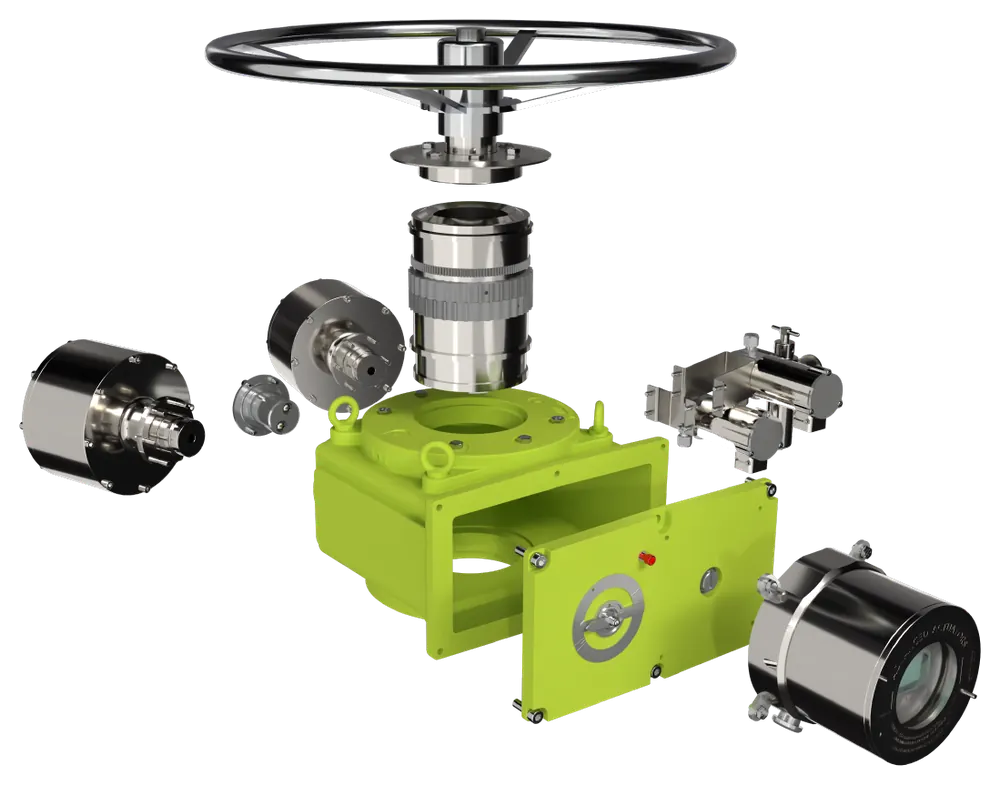
- Full strip down, so that each part can be examined for wear, corrosion and damage.
- Investigation report on what was found.
- Rebuild, using genuine parts.
- Testing and certification.
- Repainting to the original specification.
Investigation matters. HSE’s historical inspections identified valves that failed an initial test, were repeatedly retested until they passed and then remained in normal operation without a review of performance standards or testing frequency. An unexplained failure needs investigation even if a later test succeeds.
Repair, upgrade or replace?
Repair often makes sense when the housing, cylinders and mounting are sound and parts are available. Consider an upgrade when parts are obsolete, the duty has changed or you want better diagnostics. Replace when repair costs approach a new unit, or the actuator no longer suits the valve. For critical valves, keep seal kits and filter elements on site, and record each actuator’s make, model and serial number.
What to send when you ask for an actuator repair
- The make, model and serial number from the nameplate, with photos
- The symptoms, and when they started
- The valve type and size, and the supply
- The location: onshore, offshore, remote or in a hazardous area
- The urgency, and whether the valve is out of service
Training site teams to catch actuator problems early
A team that knows what normal looks like will spot small problems before they become failures on demand. Our actuator training courses cover the operation, maintenance and commissioning of hydraulic, pneumatic and electro-hydraulic actuators, on site, at our UK facility or as part of wider project support. Basic hydraulic courses help teams spot issues early, fix small problems themselves and give our engineers the right information first time.
Actuator service and repair services from Advanced Actuators
Our field-proven ranges have been designed, built, tested and repaired under one roof in Silsden, West Yorkshire, since 1969.
- After Sales and Repairs: repair, overhaul, spares and planned maintenance for hydraulic, pneumatic and electro-hydraulic actuators, onshore, offshore and remote, including other manufacturers’ actuators, and help where parts have become obsolete. Support includes a 24-hour call out, online technical help, service packages, initial site surveys, key items in stock, genuine parts and, for many clients, in-country services through partners and distributors.
- Installation and Commissioning: fully qualified hydraulic engineers for actuators, power units and controls, onshore and offshore, with site surveys and handover training.
- Training for site teams, as described above.
Provide the exact model and serial number when requesting service instructions for a HYSTEP actuator. Procedures and parts must match its generation and build.
Frequently asked questions
How often should a valve actuator be serviced?
There is no single interval. Start with the maker’s recommendations, then adjust for the duty, the environment and how critical the valve is. Safety-related valves typically have proof test intervals set by the plant’s safety studies. Between those dates, trending stroke times, position deviation and pump run times shows whether an actuator needs attention sooner.
What does an actuator service include?
A routine actuator service typically covers a visual inspection, leak checks, a timed stroke test against the commissioning baseline, and checks of the supply and controls. On pneumatic units that means air quality, filter regulators and seals; on hydraulic and electro-hydraulic units, fluid cleanliness, filters, hoses and accumulator pre-charge. Faults found may lead to a repair or a full overhaul.
What is involved in an actuator overhaul?
An overhaul aims to return the actuator to its original performance rather than fix one symptom. Our standard repair service runs in six stages: inspection, full strip down, investigation report, rebuild, testing and certification, and a repaint to the original specification. The investigation stage matters: HSE’s historical findings on riser shutdown valves underline the importance of finding the cause of a failure before returning equipment to service.
Do your actuator repair services cover other manufacturers’ actuators?
Yes. Our After Sales and Repairs team repairs and overhauls our own ranges and actuators from other manufacturers, covering hydraulic, pneumatic and electro-hydraulic types, onshore, offshore and in remote locations. We can also help where parts have become obsolete. Send the make and model from the nameplate, a photo and the symptoms, and we will advise on repair or the alternatives.
Is partial stroke testing a replacement for full proof testing?
No. A partial stroke test moves the valve through a limited part of its travel and may be possible while the process remains online, subject to the approved procedure. It can reveal some movement faults within the tested travel, but does not prove full travel, seat tightness or the complete safety function. It supplements the required full proof-test programme rather than replacing it.
What are the signs that a hydraulic actuator needs repair?
Common signs are slow or jerky strokes, drift away from the set position, external oil leaks, a pump that runs more often than before, dark or cloudy oil, low accumulator pre-charge and fault alarms from the power unit or positioner. Each is worth logging and investigating, because small leaks and contamination can turn into a valve that fails when it is needed.
Talk to our engineers about actuator service and repair
Whether you need a planned maintenance programme, an urgent repair or advice on an ageing actuator, send the make and model, a photo, the symptoms, the valve type and size, the supply, the area classification and your location, plus the torque or thrust if you are considering a replacement, to sales@advanced-actuators.com or call +44 (0)1535 655151. You can also reach us through our head office contact page, or read more about our actuator repair and after sales services.